


- Quality guaranteed | Fast delivery | Free design
- support@dongphucnacat.com
- +84 77 909 1176
When ordering polo shirt uniforms for a company, restaurant, school or team, the first question most customers ask is: which fabric should I choose? Among today’s popular materials, poly pique is always one of the most frequently asked about. The reasons are its comfortable price, low wrinkling, good shape retention and very sharp printing and logo embroidery.
However, poly pique is not the perfect choice for every need. Choose right, and a business saves money while still having a polished uniform for years. Choose wrong, and employees may feel hot and stuffy, or the shirts may wear out quickly. This article was compiled by the Nacat Uniforms team from real production experience. You will understand what poly pique is, its pros and cons, how it compares with other fabrics and when to choose it.
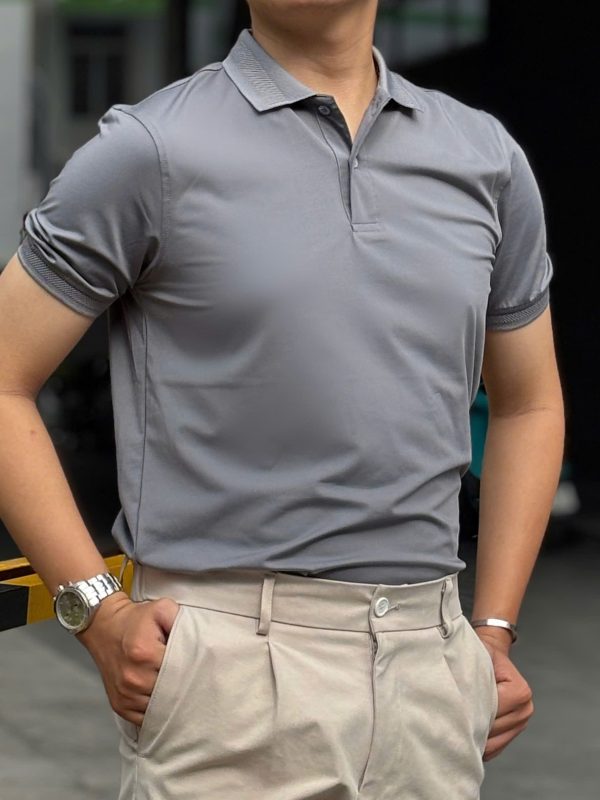
Poly pique fabric (also called polyester pique knit, PE pique or poly crocodile fabric) is a knitted fabric whose surface is raised with small, even weave cells. Up close, these cells resemble crocodile scales, which is where the name comes from. Technically, this is a pique weave (honeycomb or mesh weave), different from ordinary cotton jersey, which has a flat, smooth surface.
The “poly” part refers to the fiber material: polyester, a synthetic fiber known for its durability, wrinkle resistance and quick drying. On the market, poly pique usually comes in two forms:
Thanks to the weave structure, which creates body and thickness, pique fabric holds its shape beautifully. That is why it is the number one material for collared polo shirts, the style many businesses choose as their official uniform. You can see more fabric groups in Nacat’s overview of uniform fabrics.
Actual specifications vary by weaving mill and price segment. The table below shows common reference levels:
| Criteria | Common characteristics |
|---|---|
| Composition | 100% polyester, or poly blended with cotton/spandex |
| Weave | Pique knit (honeycomb, mesh cells) |
| Weight | About 190–250 gsm (the higher, the thicker the fabric) |
| Stretch | 2-way or 4-way (with spandex) |
| Surface | Slightly raised cells, a bit rougher than flat cotton jersey |
| Colors | Wide color palette, colorfast dyeing |
When ordering in bulk, don’t just ask for “poly pique”; ask clearly about the composition and the weight. Both are called poly pique, but 190 gsm and 250 gsm fabrics feel very different to wear.
Polyester fiber has good tensile strength and fairly good abrasion resistance. Shirts made from poly pique wrinkle little after washing, shrink little and withstand frequent washing. This matters a lot for uniforms, since employees wear them almost every day. You also won’t spend much effort ironing before a shift.
The pique structure gives the fabric body and stiffness. The collar, placket, cuffs and hem hold their shape well after many washes. This is a big plus for uniforms that need a polished look when receiving guests, working with partners or standing at a counter.
Polyester absorbs very little moisture, so shirts dry quickly after washing, even in the rainy season or humid weather. For teams with only one or two uniforms in rotation, this is a real advantage. A shirt washed last night is ready the next morning.
Poly fabric is dyed at high temperatures, so the color penetrates deep into the fibers and rarely fades or streaks after many washes. For uniforms, color is tied to brand identity. A navy or burgundy shirt that fades after a few months will hurt the image of the whole team.
Compared with 100% cotton or premium cotton lines, poly pique has a lower material cost. Businesses can outfit dozens or hundreds of employees while keeping the budget under control. Nacat publishes its polo shirt uniform price list by fabric segment so you can easily estimate costs (reference prices currently start from about $3.27 per shirt, depending on material and quantity).
The fabric surface is stable and resists stretching out, so computer embroidery on the left chest, sleeve or back produces even stitching and a clear image. Poly fabric also suits heat transfer printing very well, giving bright, long-lasting colors.
Poly pique shirts can be machine washed, need little ironing and are not fussy about mild detergents. This is a plus for organizations whose employees move around a lot, such as workers, drivers or event staff.
To choose the right fabric, you need to know its weaknesses too.
This is polyester’s biggest drawback. Poly fibers don’t “hold” water like cotton, so when you sweat a lot, the fabric can feel slightly clammy. Even so, the mesh structure of pique releases moisture fairly well and the fabric dries quickly.
Solution: choose poly pique with a moderate weight, or switch to cotton-blend pique if employees work outdoors or are very active.
High-weight poly pique (230–250 gsm and above) holds its shape beautifully but is thicker and gets hot when worn for long periods without air conditioning.
Solution: for hot environments, prefer thinner pique with breathable mesh cells, or consider cool-touch knit for group and event shirts.
Synthetic fibers tend to build up static and hold odor if not washed thoroughly, especially for shirts worn all day.
Solution: wash shirts the same day, use fabric softener or a detergent with odor-removing power, and dry them in a breezy place.
Not every poly pique is durable. Short-fiber, loosely woven, low-weight fabric easily pills on the surface, stretches out at the collar and loses its shape after a few months. Unusually cheap material is a warning sign.
Solution: ask to see real fabric samples, ask clearly about composition and weight, and prefer factories that produce in-house.
For senior management or VIP client gifts, many people prefer the cool softness of natural cotton.
Solution: use poly pique for all operations staff, and cotton or blended pique for management.
| Fabric type | Durability | Absorbency | Wrinkle resistance | Price | Best for |
|---|---|---|---|---|---|
| 100% poly pique | Very good | Medium | Very good | Economical | Workers, operations staff, bulk orders |
| Cotton-blend poly pique | Good | Fairly good | Good | Medium | Office staff, restaurants, events |
| 100% cotton pique | Medium | Very good | Medium | Cao | Managers, premium gifts |
| Cool-touch knit (flat-surface poly) | Good | Fairly good | Good | Very economical | Group shirts, team building, beach trips |
To see more knit fabrics and real samples, take a look at Nacat’s T-shirt uniforms and the collection of 436+ T-shirt uniform designs with price list.
Choose poly pique when:
Consider other fabrics when:
Before confirming a bulk order, check these 5 points:
The most reliable check is to ask for a real sample, wash it a few times and try it on before mass production. You can find detailed guidance in our article on how to order T-shirt uniforms the right way at a good price.
Choosing the right technique keeps the logo durable and attractive, matching the quality of the fabric:
Need to print a logo, slogan or name on shirts? See our custom polo shirt printing service for technical advice that fits your fabric and quantity.
Even with the same poly pique, product quality depends heavily on the fabric source, sewing skill and quality-control process. At Nacat Uniforms, we offer:
To see real products, take a look at Nacat’s pique polo shirt uniforms, or contact us to receive fabric samples and a color chart.
Is poly pique hot to wear?
It depends on the weight and weave structure. Thin fabric with breathable mesh cells is fairly comfortable in normal conditions. Very thick or poor-quality fabric can feel hot. For outdoor work, choose thin pique or a cotton blend.
Does poly pique pill?
Good-quality, tightly woven fabric pills very little. Cheap, short-fiber, low-weight fabric tends to pill after a while. Ask for a sample and wash-test it before placing a large order.
What is the difference between poly pique and cotton pique?
Poly pique is durable, low-wrinkle, quick-drying and cheaper. Cotton pique is soft and absorbent but wrinkles and shrinks more easily and costs more. The cotton-blend type is the balance point between the two.
Can poly pique shirts be printed or embroidered with a logo?
Yes. It is a great material for computer embroidery on the left chest, sleeves and back. Heat transfer and decal printing also give good results when the right technique is chosen.
Can I order a small quantity?
Nacat accepts both small orders and bulk orders. Contact our hotline for advice on minimum quantities and pricing for each fabric.
Poly pique is a practical choice for uniforms: durable, low-wrinkle, shape-retaining, quick-drying, colorfast and reasonably priced, especially suited to polo shirts with embroidered logos. Its weaknesses are lower absorbency than cotton and possible heat if the fabric is too thick. So choose according to your work environment, ask for test samples and work with a factory that is transparent about composition and weight.
If you need help choosing fabric, requesting samples or getting a uniform quote, contact Nacat Uniforms for support.
Nacat Uniforms





