
- Quality guaranteed | Fast delivery | Free design
- support@dongphucnacat.com
- +84 77 909 1176
Thai Polyester for Uniforms – The “Wrinkle-Free, Ultra-Durable” Solution for Modern Businesses with Nacat Uniforms
In recent years, uniform tailoring trends have shifted dramatically. While cotton used to be “king” for its coolness, today Polyester Fabric (especially Thai Poly Pique) is rising and taking over the market by solving office workers’ biggest pain point: wrinkling and fast wear-out.
Do you want your employees to look crisp and neat from morning to evening? Do you want a uniform that still looks new after 2-3 years, with no color fading or pilling? And most importantly, do you want to optimize your company’s budget?
Thai Polyester at Nacat Uniforms is the perfect answer. At our factory in Bien Hoa, Dong Nai, this fabric is a Best Seller (our top-selling product) with thousands of orders every month. Let Nacat “decode” the appeal of this material.
The Best Uniform Fabrics Compared | Nacat
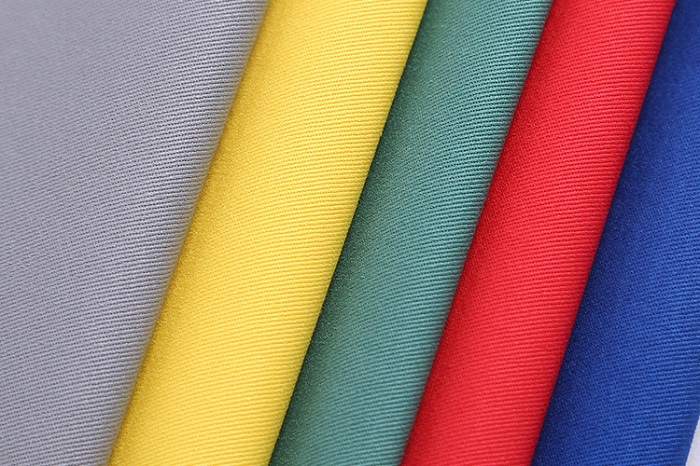
Polyester is a fabric woven entirely from synthetic fibers (ethylene derived from petroleum). In the past, traditional polyester (commonly called PE) had the drawbacks of a rough surface and a hot, stuffy feel.
However, modern textile technology has produced Thai Poly Pique Fabric.
Why do cafe chains, spas, offices, and team building events favor polyester so much?
This is its absolute advantage. Even if you crumple the shirt, wash it on a strong machine cycle, or pack it in a cramped suitcase for a business trip, a poly shirt still looks as flat as if it had just been ironed. This saves employees ironing time every morning and keeps a professional image in front of customers.
Polyester has an extremely sturdy fiber structure.
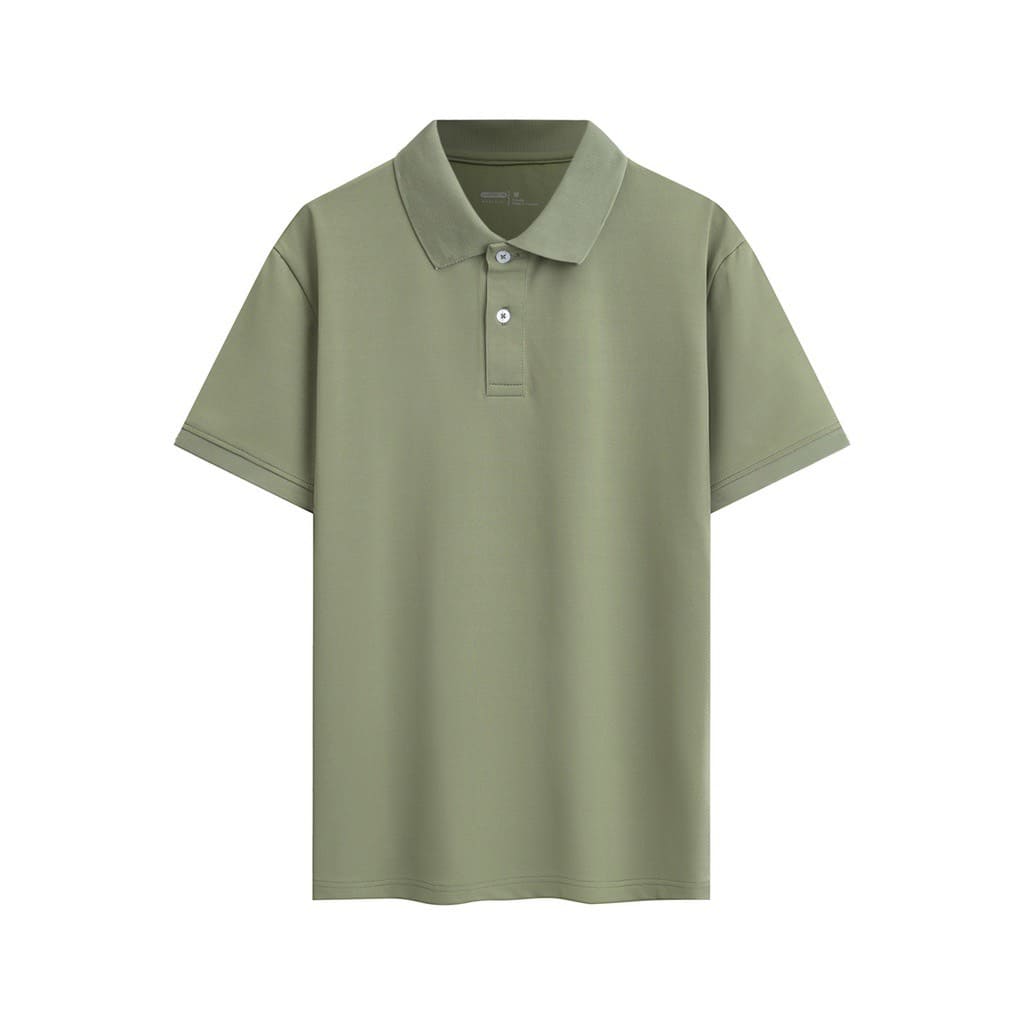
Stylish Premium Polo Shirt Uniform Collection, Factory Prices
Synthetic fibers do not retain water, so bacteria and mold struggle to grow on polyester. This keeps the shirt from smelling or yellowing, which is ideal for Vietnam’s hot, humid climate.
Thai Poly has a smooth surface with a slight sheen that looks very luxurious (Luxury look). In particular, it is the only material that can be Heat Transfer Printed (3D) all over. Prints on polyester are sharper, more vivid, and more durable than on any other fabric.
Compared with 100% cotton or CVC 65/35, polyester is 15% – 20% cheaper. For businesses with a large workforce or frequent staff turnover, this is an extremely effective economic solution.
Poly Pique Uniform Fabric: Wrinkle-Free and Extra Durable | Nacat
We offer a wide range of polyester variants to suit every need:
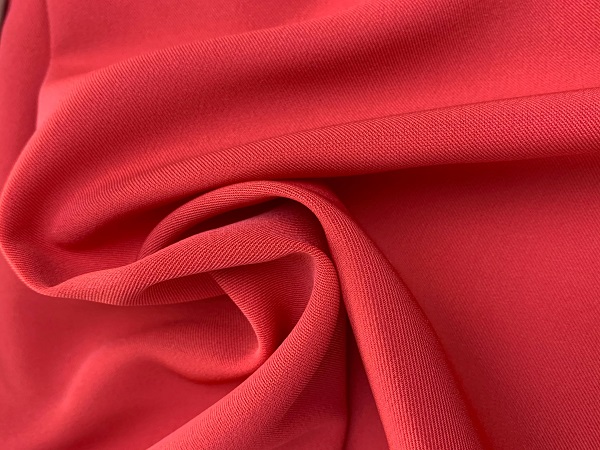
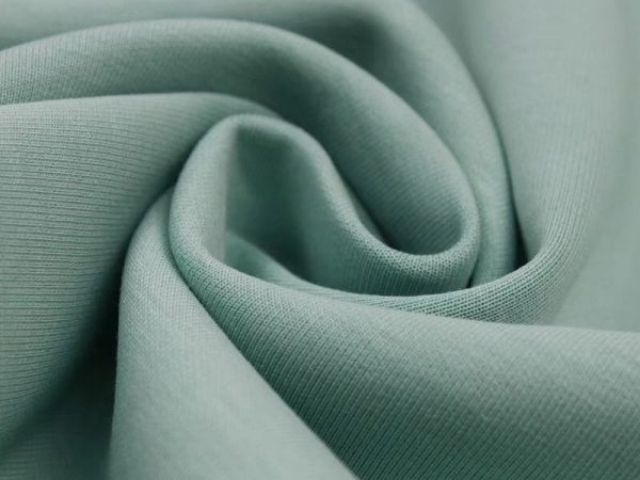
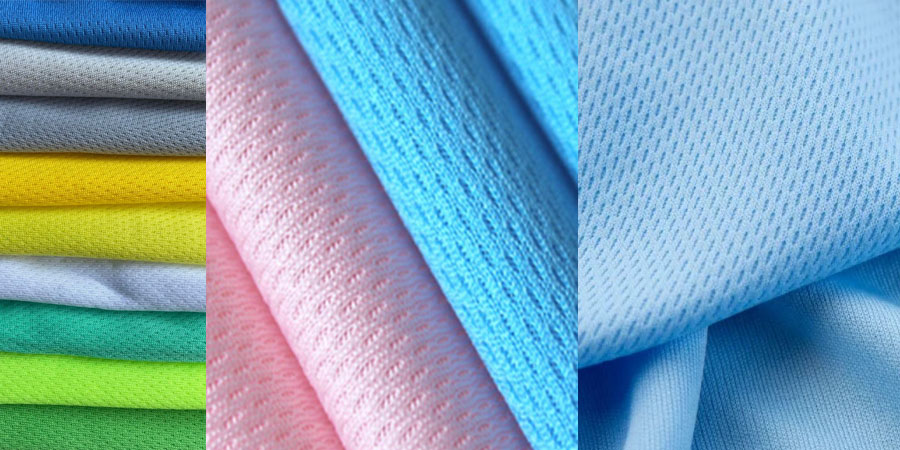
Nacat always advises transparently so customers can choose correctly. Polyester is not perfect; it has its own pros and cons compared with cotton:
| Criteria | Thai Polyester | 100% Cotton Pique |
| Wrinkling | Never wrinkles | Wrinkles very easily, must be ironed |
| Durability | Extremely high, no pilling | Average, prone to fuzzing |
| Breathability | Fair (breathable thanks to the weave, but less absorbent than cotton) | Excellent (extremely sweat-absorbent) |
| Color fastness | Permanent color retention | Fades easily after 6 months |
| Shape | Holds its shape, glossy and attractive | Slightly drapey, natural |
| Price | Cheap – Mid-range | Cao |
| Best for | Air-conditioned offices, events, anywhere durability is needed | Outdoor work in hot sun |
Coolmax Uniform Fabric: Ultra-Cool, Sweat-Wicking, Odor-Resistant | Nacat
The market has many kinds of polyester (grade 1, grade 2, ordinary PE). Without experience, it is very easy to fall victim to “fabric swapping.” At Nacat Uniforms, we commit to:
Polyester shirts can feel hotter or stuffier than 100% cotton, especially in hot environments such as HCMC or the boiler rooms mentioned in earlier suggestions.
Thermal Properties of Polyester
Polyester retains heat and breathes poorly, with low moisture absorption (only 0.4% versus 8% for cotton), so sweat builds up and causes stuffiness during strenuous activity or at high temperatures (>30°C).
Poly-cotton blends (65/35) improve this considerably: more breathable than 100% polyester but still behind pure cotton.
Comfort Comparison
| Fabric Type | Breathability | Sweat Absorption | Suitable Environment |
| Poly 100% | Low | Poor | Cold/clean rooms |
| Poly-Cotton | Medium | Good | Cafe/mechanical work |
| Cotton 100% | Cao | Very good | Hot/semi-outdoor |
| Aramid/Nomex | Medium | Medium | High-heat boiler rooms |
Solutions to Reduce Heat
Choose a poly-cotton blend plus underarm/back ventilation holes for cafes; antistatic Poly-Carbon for factories; avoid 100% polyester entirely in boiler rooms and prefer aluminized/Aramid fabrics, as in the earlier suggestions.
100% Cotton Uniform Fabric: Premium, Cool, Highly Absorbent | Nacat
Polyester can pill after machine washing, but much less than cotton or wool thanks to its tightly bonded fibers and smooth surface.
Causes of Pilling
Machine washing with strong friction (high-speed spin, washing with zippers), hot water (>40°C), or highly alkaline detergent weakens polyester fibers and releases tiny fuzz, especially in low-quality 100% polyester.
Antistatic Poly-Carbon (electronics factories) or poly-cotton blends are still more durable but need proper care.
How to Prevent Pilling
Pilling Comparison
| Fabric Type | Pilling Risk | Safe for Machine Washing |
| Poly 100% | Low-Medium | Needs a gentle cycle |
| Poly-Cotton | Medium | Good |
| Cotton 100% | Cao | Pills easily |
| Poly-Carbon | Very low | Industrially optimized |
Combine reinforced stitching (tear-resistant crotch seams) with dark colors that hide dirt so polyester stays durable and attractive in oily or high-heat environments.
To tell Thai Poly (premium polyester imported from Thailand) from ordinary PE/polyester, check by feel, simple tests, and usage characteristics, since Thai Poly uses higher-quality nylon/polyester yarn woven in a fine lacoste knit.
Key Features
Thai Poly is soft with a naturally smooth sheen, stretches well (3-5% shrinkage), does not pill after machine washing, dries quickly, and keeps its color, making it ideal for the anti-pilling spa/cafe uniforms mentioned earlier.
Ordinary PE is coarser, pills easily, feels stuffy, and absorbs moisture poorly. It suits low budgets but is less durable in oily or factory environments.
Practical Ways to Tell Them Apart
Comparison Table
| Criteria | Thai Poly | Ordinary PE |
| Smoothness/Sheen | Very high, lacoste weave | Low, coarse yarn |
| Pilling Resistance | Excellent | Pills easily in machine washing |
| Stretch | Good, quick-drying | Poor, sags easily |
| Price | 20-30% higher | Cheap |
Prefer Thai Poly for Poly-Carbon protective clothing (electronics factories) or cafe aprons for lasting good looks; avoid ordinary PE in hot or oily environments.
Lacoste (Pique) Fabric for Premium Uniforms, Factory Prices | Nacat
Polyester prints best with heat transfer (sublimation) technology, because the ink penetrates deep into the fibers, producing sharp, vivid, and extremely durable images.
Why Choose Heat Transfer Printing
This technology uses 180-200°C heat to turn the ink on the paper into gas that bonds tightly into Thai Poly/PE (see the earlier comparison). It leaves no bumpy feel, resists pilling and fading after machine washing, and is ideal for protective clothing, cafe aprons, or antistatic Poly-Carbon.
Colors are vivid (especially red/orange, which stimulate appetite), and complex 3D patterns can be printed without causing the stuffiness of ordinary polyester.
Technology Comparison
| Technology | Look on Polyester | Durability | Suitability for Thai Poly |
| Heat Transfer (Sublimation) | Excellent, vivid | Very high | Optimal |
| In DTF (PET) | Sharp multicolor | Cao | Good, flexible |
| Screen Printing | Medium | Low | Not recommended |
Prefer heat transfer for dark colors that hide grease (navy/gray) or bright ones (yellow, which stimulates appetite), combined with embroidered logos if a 3D raised effect is needed; avoid ordinary printing, which peels easily in boiler-room/factory environments.
Thai Polyester Fabric for Uniforms: Wrinkle-Free, Pill-Free, Affordable | Nacat
To keep polyester uniforms looking new, especially Thai Poly or Poly-Carbon from earlier suggestions, wash gently in cold water and dry in the shade to avoid pilling and fading of heat-transfer prints.
Optimal Washing Process
Hand wash or use a gentle machine cycle with warm water below 40°C and a neutral detergent; turn the shirt inside out and wash it separately to avoid color bleeding; soak in fabric softener for 15 minutes to prevent static and add softness.
Rinse 2-3 times and gently press out the water instead of wringing hard to keep the shape, especially for pants with reinforced crotch seams that resist tearing.
Drying & Ironing
Dry in a shaded, breezy spot on a wide hanger to avoid stretching the shoulders; do not use hot tumble drying or direct sun, so dark grease-hiding colors and sharp heat-transfer prints stay intact.
Iron at low heat through a damp cloth; avoid ironing directly, which leaves polyester shiny and dull.
Care Notes
| Step | Key Tip | Avoid |
| Washing | Cold water, inside out | Hot >40°C, hard wringing |
| Drying | Shade, hang properly | Harsh sun, high-heat drying |
| Storage | Folded neatly, cool and airy | Damp, mold, stacking |
Wipe off grease stains immediately with a damp cloth before washing, check the label to suit antistatic Poly or cafe use, and wash after every 5-7 wears to keep it looking new.
Don’t just listen to ads; touch it yourself. We are ready to send a free Thai Poly Fabric Sample Kit to your office so you can feel the quality.
Let Nacat Uniforms help your business own uniforms that are Elegant – Durable – Economical.
Contact Information:
📍 Factory Address: Alley 33/86, Long Binh Ward, Dong Nai
📧 Email: support@dongphucnacat.com
☎️ 24/7 Consulting Hotline: +84 77 909 1176
NACAT UNIFORMS – GOOD FABRIC, FAIR PRICES, HEARTFELT SERVICE